
Which Martial Art Is Best for Fitness in 2026?
Quick Summary
Martial arts fitness depends on the style and how consistently you train, but most adults benefit from two to three classes per week. Striking styles like boxing and kickboxing build measurable cardio, while grappling styles like Brazilian Jiu Jitsu build grip and pulling strength.
- Two to three sessions per week is a sustainable starting point for most adults.
- Boxing and kickboxing offer high, interval-based aerobic demand that is easy to measure.
- Brazilian Jiu Jitsu builds grip, pulling and core strength with lower impact on the shins.
- Students often notice strength and muscle gains in the early months of training.
- Watch out for skipping warm-ups, ignoring sharp joint pain, and sparring before fundamentals are solid.
Table of Contents
- Martial Arts for Fitness in 2026: What the Evidence Covers
- Best Martial Arts for Fitness: How the Main Styles Compare
- Cardio, Strength and Flexibility: What You Actually Build
- Martial Arts Workout for Beginners: What a First Month Looks Like
- How Often to Train Martial Arts for Fitness Results
- Martial Arts for Older Adults: Adaptations and Safe Progression
- Injury Risks and How to Progress Safely
- How to Choose a Class and Instructor, and Book Your First Session at American TKA Martial Arts
- Frequently Asked Questions
Martial Arts for Fitness in 2026: What the Evidence Covers
Last Updated: November 28, 2026
Martial arts fitness in 2026 is a bigger question than most gym-goers realize, and the honest answer depends on the style, the student, and how consistently they train. American TKA Martial Arts teaches Tae Kwon Do, MMA, Boxing and Brazilian Jiu Jitsu in Davie, FL, and we see the same pattern over and over: people who stick with a martial art for a few months get something a treadmill rarely delivers, namely a reason to show up. The industry itself is growing, with Growth in the number of studios does not prove any particular fitness result, so this guide separates what the research supports from what gets repeated in marketing copy.
The research on martial arts and wellness is real but uneven. Neither study, as summarized in the research available to us, reports a quantified fitness effect, so we avoid putting numbers on outcomes we cannot verify.
What we can say from practice is that the first few months look different from what most people expect. At American TKA Martial Arts, we find that after 90 days of classes, adult students often show more confidence, and they become more positive, excited and confident in their demeanor. Students often see very noticeable results in muscle and strength, and after these early results, they are eager to achieve other milestones.
Throughout this guide we compare styles by fitness goal, cover beginner suitability and injury risk, and give a realistic weekly plan. The aim is a decision you can make with confidence rather than a sales pitch.
Best Martial Arts for Fitness: How the Main Styles Compare
No single martial art is best for every fitness goal, but the styles do differ in predictable ways once you look at what a typical adult class actually asks of the body. For a deeper guide to choosing the best martial art for adults, see a practical guide to choosing the right style. The comparison below is organized around four fitness outcomes, aerobic demand, strength, mobility, and typical training intensity, and it reflects common class formats rather than elite competition training. Individual schools vary widely, so treat this as a starting framework for asking better questions when you visit a class.
How the styles differ by fitness outcome
Boxing and kickboxing. Aerobic demand is high and interval-based: classes usually alternate 2-3 minute rounds of combinations with short rest, which trains repeat-effort capacity more than steady-state endurance. Strength work is concentrated in the shoulders, core, and legs, with less pulling demand than grappling. Mobility focuses on hip rotation and shoulder range for punching. Typical intensity is moderate to high, and the learning curve for basic combinations is relatively short, which makes this the easiest striking entry point for most adults.
Muay Thai. Aerobic demand is high, often with longer rounds and more clinch work than boxing. Strength demand includes legs, core, and clinch-specific pulling and framing strength. Mobility requirements are moderate to high, especially hip and ankle range for kicks. Typical intensity is high, and shin and leg conditioning can take months to adapt to, so it suits students with some base fitness or a patient progression plan.
Brazilian Jiu Jitsu. Aerobic demand is moderate to high but intermittent: rounds alternate bursts of effort with positional control, which can feel easier aerobically than striking while placing heavy isometric and grip demands on the body. Strength focus is grip, pulling, core, and hip movement. Mobility emphasizes hip and spine range and the ability to move on the ground. Typical intensity is moderate to high, and early cardio gains can feel slower because the skill load is high.
Tae Kwon Do and karate. Aerobic demand is moderate in most adult classes, rising with sparring or conditioning segments. Strength focus is legs and core, with bodyweight and stance work. Mobility focus is high, particularly hip and hamstring range for kicking and low stances. Typical intensity is moderate, and the structured belt progression gives clear milestones, which helps adults who want measurable advancement.
Mixed martial arts. Aerobic demand is very high because sessions combine striking, grappling, and conditioning. Strength demand is full-body, and mobility requirements span both standing and ground positions. Typical intensity is high, and the learning curve is the steepest of the group because you are training several skill sets at once.
Comparison table: fitness demands by style
| Style | Aerobic demand | Strength focus | Mobility focus | Typical intensity | Best for |
|---|---|---|---|---|---|
| Boxing / kickboxing | High, interval-based | Shoulders, core, legs | Hip rotation, shoulder range | Moderate to high | Conditioning and stress relief |
| Muay Thai | High | Legs, core, clinch strength | Hip and ankle range | High | Full-body power |
| Brazilian Jiu Jitsu | Moderate to high, intermittent | Grip, pulling, core | Hip and spine range | Moderate to high | Strength and endurance |
| Tae Kwon Do / karate | Moderate | Legs, core | High, especially hips and hamstrings | Moderate | Flexibility and coordination |
| Mixed martial arts | Very high | Full body | Standing and ground range | High | Advanced all-round fitness |
Calorie burn varies too widely with body size, class format, and effort to assign reliable per-style figures, so the table focuses on demands you can actually feel and track. A common pattern is that students who want visible cardio progress do best with a striking class two to three times per week, while students who want strength that carries into daily life often prefer grappling supplemented with one striking session. Students looking to intensify training can review the intensive summer, winter and spring training camp programs.
Pros and cons of each style
Boxing and kickboxing. Pros: clear conditioning benefits, easy-to-learn combinations, and a structured round format that makes progress easy to see. Cons: repetitive impact on the shoulders and hands if technique is poor, and limited pulling strength. Best for adults who want cardio they can measure.
Muay Thai. Pros: strong full-body power development and high intensity. Cons: significant shin and leg conditioning requirements that can take months to adapt to, and a steeper technical curve than boxing. Best for students with a few months of base fitness.
Brazilian Jiu Jitsu. Pros: builds real grappling strength and a strong, patient training culture, with lower impact on the feet and shins than striking. Cons: slower to produce visible cardio gains early on and can be intimidating for beginners who are new to close contact. Best for those who enjoy problem-solving and sustained effort.
Tae Kwon Do and karate. Pros: excellent flexibility, coordination, and discipline, with a clear belt progression. Cons: less intense cardio than striking or grappling styles unless the class is designed for it. Best for adults who want balanced development and structure.
Mixed martial arts. Pros: the most complete training stimulus across cardio, strength, and skill. Cons: the steepest learning curve and the highest injury exposure, especially once sparring begins. Best for experienced trainees or those ready to progress deliberately.
Watch out: choosing a style based on a single viral clip rather than a trial class is the most common way adults end up in a program that does not match their fitness goal.
Cardio, Strength and Flexibility: What You Actually Build
Martial arts training builds three things at once: aerobic capacity from sustained rounds, muscular strength from kicks, strikes, and grappling resistance, and flexibility from the range of motion that kicking and stance work demand. The balance among them depends on the style and class format. A typical adult class alternates bursts of movement with brief rest, which trains the cardiovascular system differently from steady-state running.
For most adults, martial arts fitness shows up first as strength, and it is often the first thing they notice. Students often see very noticeable results in muscle and strength in the early months. Flexibility improves more gradually and depends heavily on how much stretching you do outside class. Cardio tends to build steadily as you learn to pace yourself across rounds rather than sprinting from the start. As strength, flexibility, and cardio develop at different paces, martial arts for seniors can be approached with the same attention to gradual progress and individual needs.
Martial Arts Workout for Beginners: What a First Month Looks Like
A first month in martial arts is about learning movement patterns, not conditioning yourself to exhaustion. Expect two to three classes per week, a focus on stance, footwork, basic strikes or kicks, and a lot of instructor feedback. Most beginners are sore in new places, and that soreness fades as the body adapts.
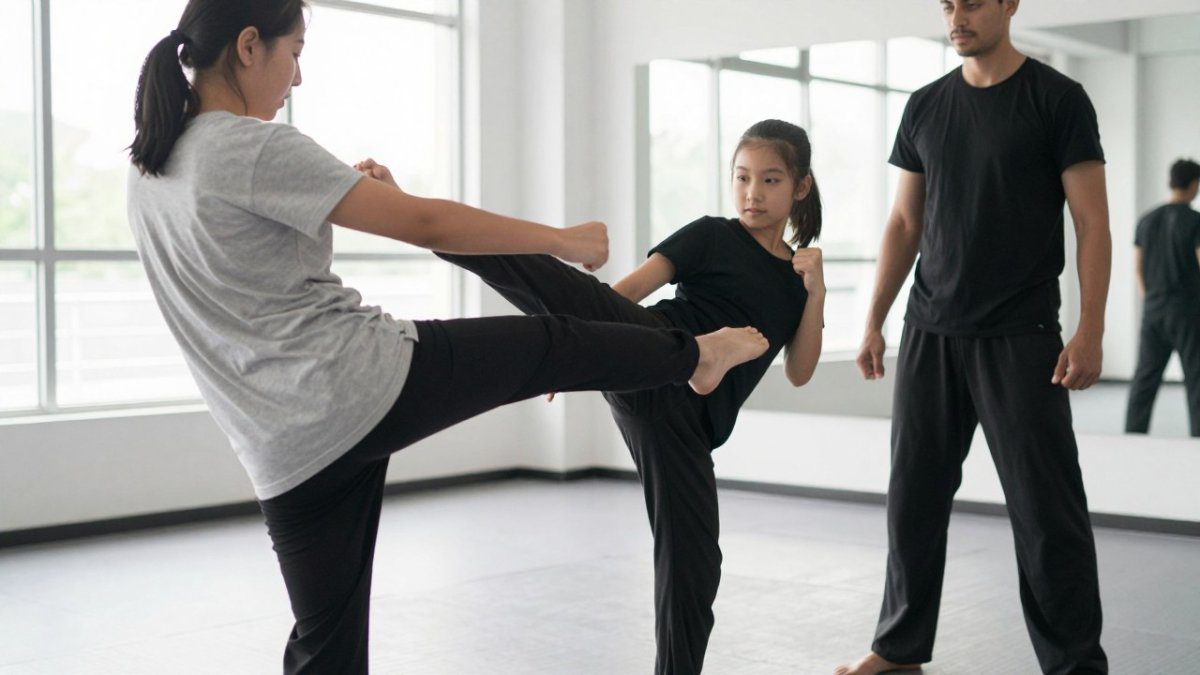
Week one usually covers warm-up drills, stance, and a few foundational techniques. By week two, you are linking movements into short combinations. Weeks three and four add light partner work and more sustained rounds. Expect the workout to feel awkward at first; that is normal, and the coordination gains show up quickly.
Beginners do best when they arrive hydrated, stretch lightly before class, and tell the instructor about any old injuries so the class can be adapted. An adult beginner who mostly wants fitness and self-defense has a clear place in a beginner track, and the instructor can scale intensity to your current level.
How Often to Train Martial Arts for Fitness Results
For most adults, two to three sessions per week is a sustainable starting point that produces measurable change without overwhelming recovery. Four or more sessions can work once technique is solid and the body has adapted, but jumping to that frequency too soon raises injury risk and burnout.
A realistic weekly plan for a beginner might look like this: two technique-focused classes, one conditioning class, and one or two days of light stretching or walking. As you progress, add a session or make classes more demanding rather than doing everything at once. Consistency matters more than intensity in the first three months, because the habit itself is what keeps adults from dropping out after a few weeks.
Martial Arts for Older Adults: Adaptations and Safe Progression
Older adults can train martial arts safely, but the approach should emphasize balance, controlled movement, and joint-friendly technique. Lower-impact striking drills, slower grappling sessions, and flexibility work are common adaptations. Before starting, consult a doctor if you have heart, joint, or balance concerns, and tell your instructor about any limitations so the class can be modified.
Progression should be gradual. Rather than adding intensity every session, increase rounds, speed, or difficulty only when technique feels controlled and recovery is good. Many older students find that the discipline and social structure of a class keep them engaged far longer than a solo routine would.
Injury Risks and How to Progress Safely
Martial arts carries real injury risk, mainly from overuse, poor technique, and sparring too early. Common problems include sore shins, wrist and knuckle strain from striking, and knee or ankle stress from pivoting. Most injuries trace back to skipping warm-ups, ignoring pain, or advancing to harder partner work before the fundamentals are solid.
Progress safely by mastering technique before adding speed or resistance, using protective equipment for striking and sparring, and taking rest days seriously. Watch out: pushing through sharp joint pain instead of resting is the single most common way adult beginners sideline themselves for weeks. If pain persists beyond a few days, stop and get it checked.
How to Choose a Class and Instructor, and Book Your First Session at American TKA Martial Arts
Choosing a class is a decision you can make systematically rather than by vibe. The checklist below covers the factors that most often separate a program adults stick with from one they quit after a month: coaching quality, beginner onboarding, class structure, safety practices, and what a trial session should tell you.
A practical checklist for evaluating a class
Coaching quality. Look for an instructor who explains why a technique works, not just how to copy it, and who corrects individuals during class rather than only demonstrating from the front. Ask how instructors are trained and whether they have a structured progression for adult beginners. A common pattern in strong programs is that the instructor can describe the class plan for the next several weeks.
Beginner onboarding. Ask how new students are integrated: is there a dedicated beginner track, an introductory series, or one-on-one onboarding before joining general classes? Programs that place beginners directly into advanced sparring without a ramp-up are a warning sign for injury risk and dropout.
Class structure. A well-structured adult class typically includes a warm-up, technique instruction, drills or partner work, and a cool-down, with intensity scaled to the group. Ask how much of the class is conditioning versus skill work, because the ratio tells you whether the program matches a fitness goal or a competition goal.
Safety practices. Ask what protective equipment is required for striking and sparring, how sparring is introduced, and what the policy is for injuries. Programs that require gear for contact work and phase in sparring gradually are generally safer for adult beginners.
Trial session criteria. Use a trial class to check three things: whether the instructor acknowledged you as a beginner, whether the warm-up and drills felt scalable to your current fitness, and whether you left understanding what the next month would look like. If any of those are unclear, ask before you commit.
Questions to ask before you sign up
- How are adult beginners grouped, and when do they first spar or do live partner work?
- What protective equipment is required, and is any of it provided during a trial?
- How many classes per week are recommended for a beginner, and what does progression look like in the first 90 days?
- What is the policy for missed classes, pauses, or injuries?
- Can I observe or try a class before committing to a membership?
Costs and equipment to expect
Pricing depends on class format, equipment and schedule, so please contact American TKA Martial Arts directly for current prices or a quote.
Booking your first session at American TKA Martial Arts
At American TKA Martial Arts, our black belt instructors teach Tae Kwon Do, MMA, Boxing and Brazilian Jiu Jitsu, and we build adult classes around fitness, self-defense, and steady progression. To find the program that fits your schedule and goals, you can explore our adult and teen programs, check our current class schedule, or talk to one of our martial arts instructors with questions before you book.
Best for: adults who want structured fitness with a clear path to new skills.
Skip if: you want a purely solo, unstructured workout with no instructor feedback.
Watch out: committing to an annual membership before attending a trial class is the most common way adults end up paying for a program that does not fit their schedule or fitness level.
Start with a single trial session, pay attention to how you feel afterward, and let the results guide your next step. Book your first class with American TKA Martial Arts and see which style fits your goals.
Frequently Asked Questions
Which martial art is best for fitness?
No single style wins for everyone. Boxing and Muay Thai are strong for cardio and conditioning, Brazilian Jiu-Jitsu builds grip and full-body strength through grappling, and Tae Kwon Do adds flexibility and kicking power. The right choice depends on your goal, your schedule and whether you enjoy sparring or drilling. At American TKA Martial Arts, students train Tae Kwon Do, MMA, Boxing and Brazilian Jiu-Jitsu, so you can compare them in person before committing.
Can martial arts help you lose weight?
Martial arts can contribute to weight management because rounds of striking, footwork and drills keep heart rate elevated. Calorie burn varies widely by intensity, body weight and style, and no single figure applies to everyone. Combining regular classes with consistent eating habits gives the most reliable results. The research supplied for this article does not quantify fitness outcomes, so treat calorie estimates as rough guides.
How many times a week should you train martial arts for fitness?
Most adult beginners do well with two to three sessions per week, which allows recovery between hard classes. Once technique feels comfortable, three to four sessions can build conditioning steadily. Rest days matter as much as training days, especially for joints and sleep. Start lower than you think you need and add a session only when recovery feels good.
Is martial arts training a good workout for beginners?
Yes, when the class is structured for beginners. A good first month includes warm-ups, basic stances, striking or footwork drills, and conditioning that scales to your level. Beginners should expect to feel winded at first and improve within weeks. Ask whether the instructor teaches fundamentals before sparring, and whether adults can start without prior experience.
What martial art is best for older adults?
Low-impact striking drills are often easier on joints than high-impact sparring. Older adults benefit from balance work, controlled footwork and flexibility training. Choose a school that offers adult classes, adjusts intensity and lets you progress at your own pace. Check with a physician before starting if you have medical conditions.
How do I choose a martial arts class for fitness?
Look for a clear class structure, instructors with verifiable rank and experience, and an adult beginner track. Watch a class before you join to see how students are treated and whether the pace suits you. Ask what a typical week of training looks like and how progress is measured. At American TKA Martial Arts, our black belt instructors teach Tae Kwon Do, MMA, Boxing and Brazilian Jiu Jitsu.
